.png)
Create an Effective Missionary Prayer Card
If you have not read it yet, Mission Quest recently shared a practical guide called “Do I need a Missionary Prayer Card?.” In that post, we shared why every missionary needs a prayer card and how those cards can help mobilizing prayers.
This post answers the next question most missionaries ask after that. How can I create an effective missionary prayer card?
A missionary prayer card can feel like a small detail in the middle of big decisions, training, fundraising, travel, and ministry preparation. But that little card often becomes one of the most practical tools you have for building long-term prayer partnerships.
A well-made missionary prayer card is not simply a printed introduction. It is a bridge. It connects someone who cares about missions with a real person, a real calling, and real needs that require consistent prayer. If you are preparing for the field, building a support team, or refreshing your outreach materials, this guide will help you create an effective missionary prayer card that people will actually use.
Why a Missionary Prayer Card Still Matters
With social media, newsletters, and websites, it is reasonable to ask if a prayer card is still necessary. The answer is yes, for a simple reason: a prayer card is easy to keep and easy to remember.
People tuck them into Bibles, pin them to bulletin boards, place them on refrigerators, or keep them on a desk at work. In other words, your prayer card becomes a physical reminder that you exist and that your work needs prayer. It helps supporters turn good intentions into consistent habits.
A missionary prayer card also works in moments when digital tools are not ideal. At a church missions conference, a small group gathering, a meal with friends, or after a Sunday service, a prayer card is a natural way to connect without putting pressure on someone.
Start With the Main Purpose: Mobilize Prayer
Before you design anything, decide what success looks like.
The goal of a missionary prayer card is not primarily to impress people. It is to mobilize prayer. That means every choice you make should support three outcomes:
People understand who you are and where you serve.
People know how to pray for you specifically.
People remember you and can easily stay connected.
If your prayer card does those three things well, it is effective.
What to Include on a Missionary Prayer Card
Missionaries often overthink this part. The best approach is simple: include what a prayer partner needs, not everything you could possibly say.
1) Your Names and Role
Use the names you actually go by, not only formal names. If you are a couple or family, include everyone in a clear way.
Add a brief role description that is understandable to someone who does not know missions language. For example:
Church planter in northern Kenya
Campus ministry team in Prague
Bible translation support role in Southeast Asia
Member care and training for missionaries in Latin America
Clarity matters more than sounding impressive.
2) Location and Sending Context
Include where you serve and, if helpful, the region or country. If security is a concern, you can be careful without being vague. For example:
Central Asia (city not listed)
Southeast Asia (restricted access area)
If you are sent through a church, organization, or network, include that connection if it helps people understand accountability and partnership.
3) A Short Ministry Summary
Aim for one or two sentences. Avoid long paragraphs. A good ministry summary answers:
Who do you serve?
What are you doing?
Why does it matter?
Example structure:“We serve university students through discipleship and leadership development, helping local believers plant healthy churches.”
4) A Clear Prayer Focus
This is the heart of the missionary prayer card. Include 3 to 5 specific prayer requests that are not generic.
Better prayer points are:
Specific: “Wisdom as we disciple three new leaders this semester”
Measurable or time-bound: “Fruitful outreach during Ramadan”
Human: “Language growth and healthy team unity”
Missional: “Open doors to share the gospel with families in our neighborhood”
Avoid overly broad requests like “Pray for the ministry” unless you also give specifics.
5) Contact and Connection Options
Make it easy for people to follow you and stay informed. Depending on your context, include:
Email address
Website
Newsletter signup link
Social media handle
QR code that points to a single landing page
A QR code is helpful, but do not rely on it alone. Some people still prefer typing a short URL.
6) Support Information With the Right Tone
Many missionaries wrestle with this: should you mention giving on a prayer card?
There is no single answer that fits everyone, but here is a balanced approach: keep the card prayer-centered, but do not hide the fact that partnership includes financial support for those who are called to it.
One simple line can work:“Partner with us in prayer and support.”
If you include giving instructions, make them clean and non-pushy. The card should invite conversation, not pressure decisions.

Design Tips That Increase Use, Not Just Beauty
A missionary prayer card does not need to be flashy. It needs to be readable, durable, and personal.
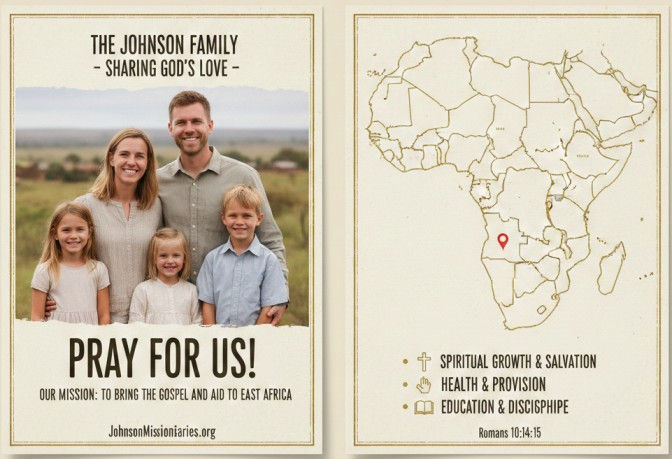
Use a Real Photo
Choose a photo that looks like you and communicates warmth. People pray for people, not logos.
Tips:
Use a clear, high-resolution image
Avoid heavy filters
Choose a background that does not distract
If you serve as a family, use a photo that feels natural, not stiff
Prioritize Readability
Small fonts and crowded layouts make cards less useful. Use:
Large enough text for older eyes
Strong contrast between text and background
Adequate spacing
If someone cannot read it quickly, they will not keep it.
Choose a Practical Size
Common options:
4 x 6 postcard size: easy to print, easy to keep
3.5 x 2 business card size: convenient, but limited space
Bookmark style: great for Bible placement, very “sticky” for ongoing prayer
For most missionaries, a 4 x 6 format is a strong starting point.
Consider Durability
Matte finishes often feel better and are easier to read than glossy finishes under bright lights. If you want people to keep it in a Bible, consider a sturdier stock.
Common Mistakes to Avoid
Here are a few mistakes that can quietly reduce the effectiveness of your missionary prayer card:
Making it a biography instead of a prayer tool
Using too much insider language
Including outdated contact info or old photos
Listing vague prayer requests
Overcrowding the design so nothing stands out
Forgetting to include a next step for staying connected
A simple card that is easy to use will outperform a complicated card every time.
How to Use Your Missionary Prayer Card Well
The card matters, but the way you use it matters too.
Bring prayer cards to:
Church missions Sundays
Small groups
One-on-one meetings
Prayer gatherings
Home assignment visits
Conferences and training events
When you hand someone a prayer card, consider saying something like:“Thank you for praying. Here are a few specific ways to pray for us.”
That one sentence frames the card correctly. It reinforces the purpose and invites action.
A Prayer Card Is a Partnership Invitation
At Mission Quest, we believe missionaries thrive when they are genuinely known and consistently prayed for. A missionary prayer card is one of the simplest tools to build that kind of partnership.
If you create your card with clarity, warmth, and specific prayer direction, you are giving people something they can actually use. You are helping supporters move from “I’ll pray for you” to “I am praying for you.”
And over time, those prayers shape you, strengthen you, and sustain the work God has called you to do.
If you are preparing a new missionary prayer card or refreshing an older one, keep it simple, keep it specific, and keep prayer at the center. Your future prayer partners will thank you, and you will feel the difference on the field.


